A beautiful light fitting should still earn its place when switched off. That is the central appeal revealed in any considered alabaster fixture review: this is not simply a material chosen for illumination, but a natural stone selected for its quiet veining, warmth and sculptural presence. In a foyer, dining room or refined bedroom, alabaster can make a ceiling fitting feel like an architectural finish rather than an accessory.
It is also a material that asks shoppers to look beyond a product photograph. Each piece carries its own mineral character, the light it produces is softer than clear glass, and the fitting deserves thoughtful placement. For homeowners investing in a statement interior, those qualities are often precisely what make alabaster worthwhile.
Alabaster fixture review: the visual effect
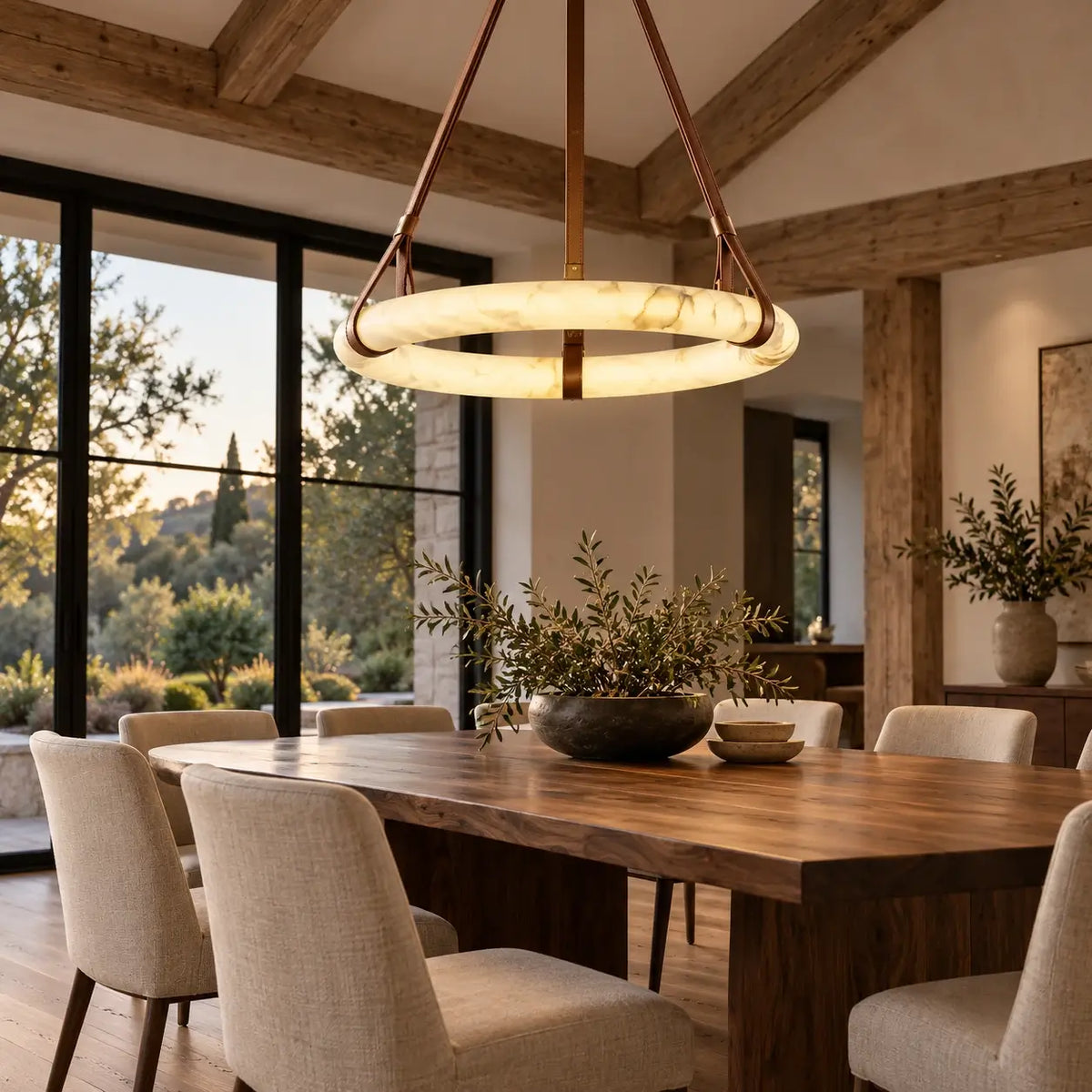
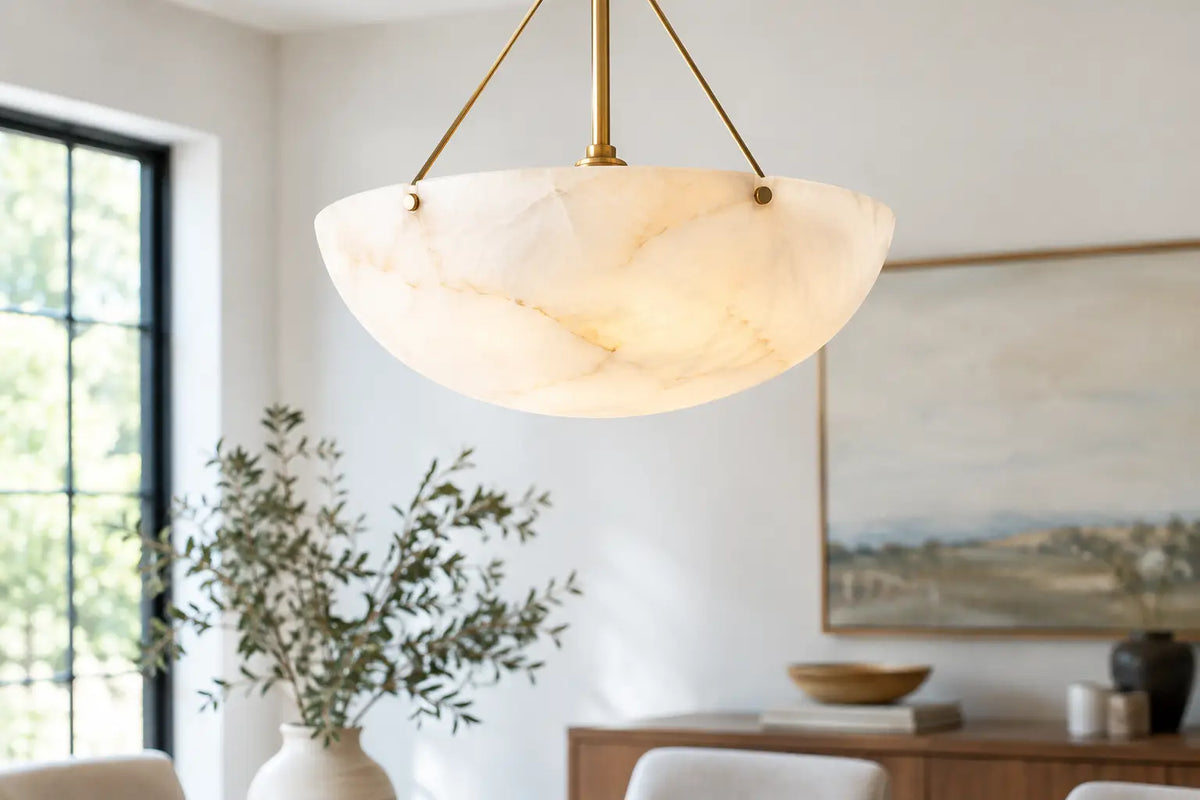
Alabaster has a milky translucency that gives decorative lighting an unusually flattering glow. When illuminated, the stone gently diffuses the lamp’s brightness rather than allowing an exposed source to dominate the room. The result is atmospheric and polished, particularly in spaces designed for entertaining, relaxing or making a first impression.
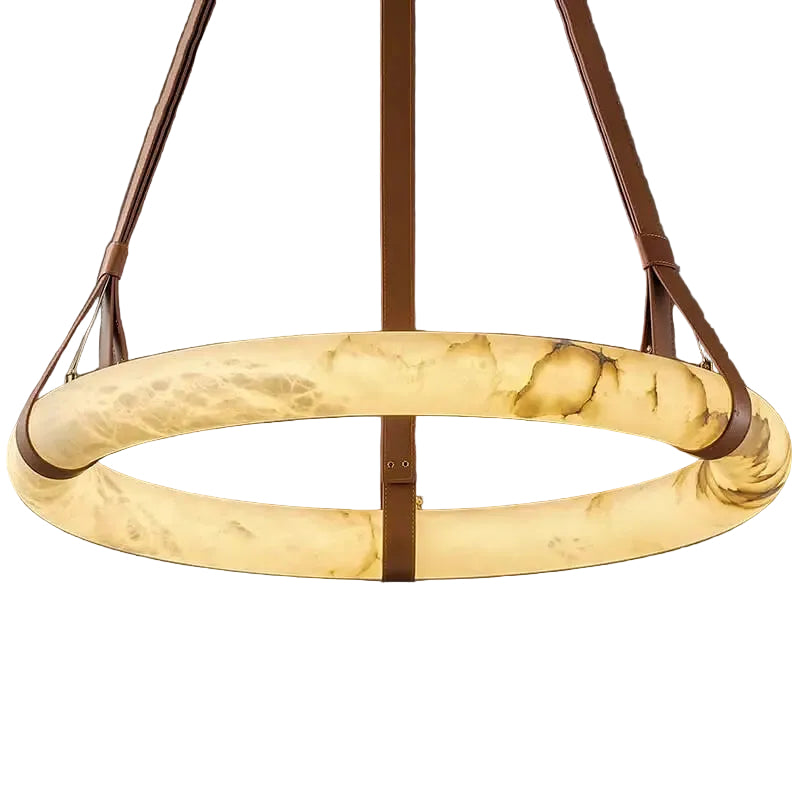
The material is naturally varied. Fine clouds, amber undertones, soft grey traces and delicate veining may appear across a shade, disc or pendant body. This variation is not a flaw. It is the signature of genuine stone and means an alabaster chandelier or pendant will never look entirely mass-produced. A shopper seeking perfect visual uniformity may prefer frosted glass or acrylic. Someone who values depth and individuality will usually see the variation as part of the luxury.
Alabaster works exceptionally well alongside brushed brass, antique brass, bronze and black metal. Brass enhances its warm, traditional-luxury character, while darker metal gives the stone a more contemporary, gallery-inspired edge. In a room with marble, timber, bouclé upholstery or aged brass hardware, the material can tie several considered finishes together without becoming overly ornate.
The light quality is the real distinction
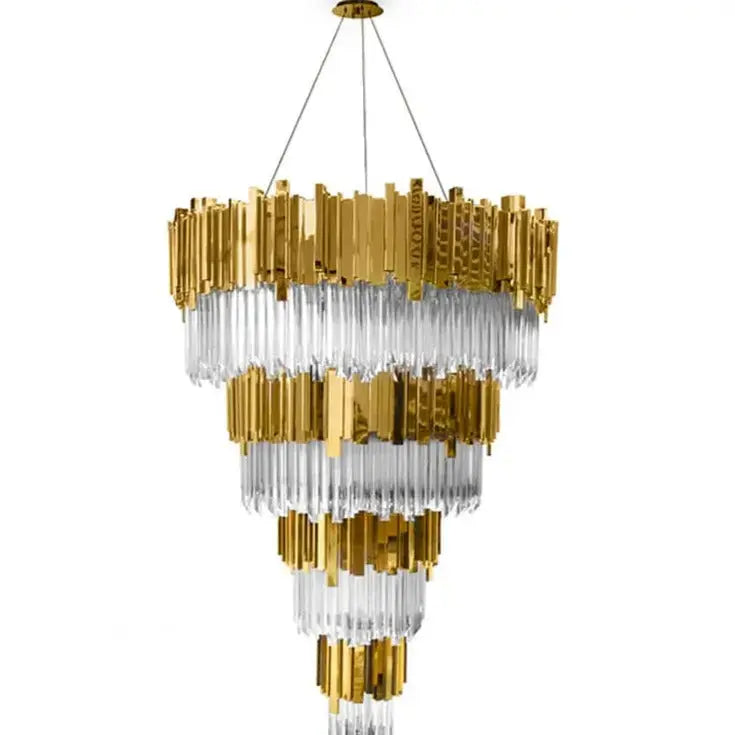
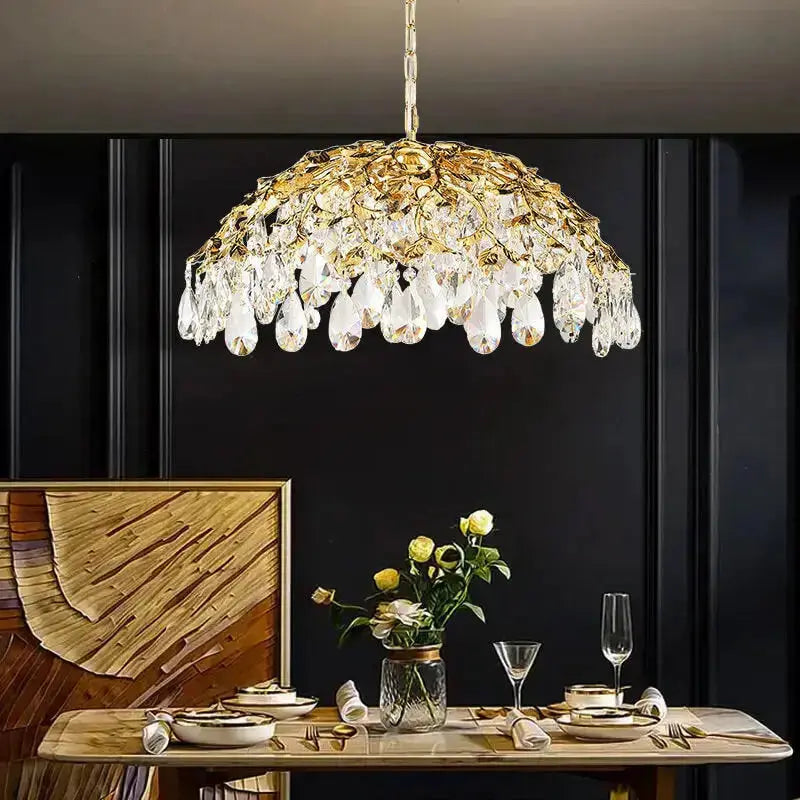
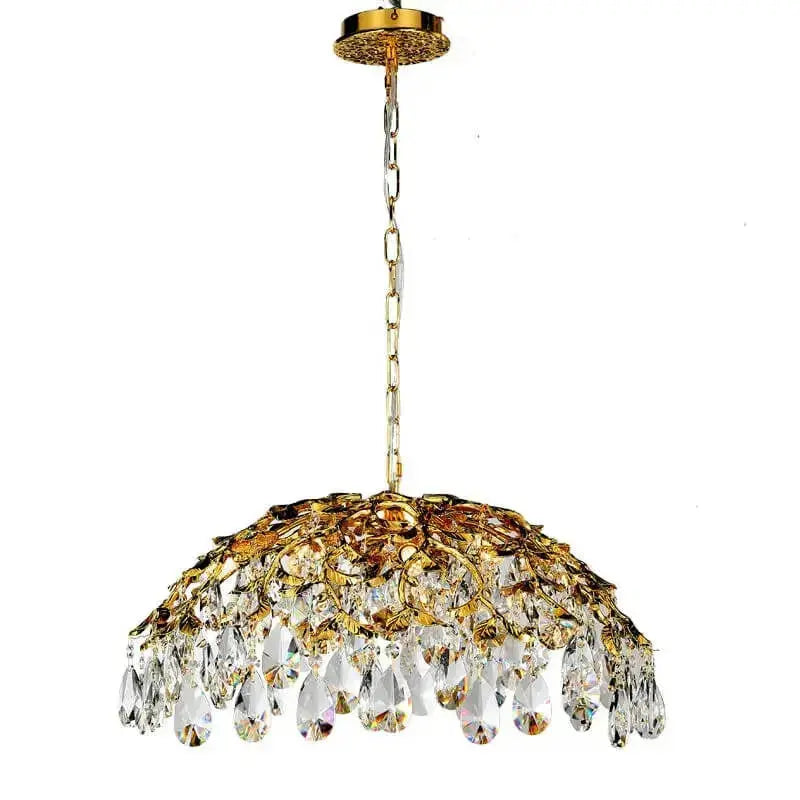
A clear crystal chandelier is designed to sparkle. Alabaster is designed to glow. Neither is inherently superior, but they create very different moods.
Because stone shades filter the source, an alabaster ceiling light usually offers gentler ambient illumination with reduced glare. This is ideal over a dining table, in a bedroom, above a landing or as part of a layered living-room scheme. It creates a calmer evening atmosphere and looks especially elegant on a dimmer, where the material’s warmth becomes more pronounced.
There is a trade-off. A single compact alabaster pendant may not provide the crisp task lighting needed over a hard-working kitchen island or beside a grooming mirror. For these settings, consider a multi-light fitting, choose an appropriate output, or support the main fixture with under-cabinet lighting, wall lights or discreet spotlights. Luxury lighting feels most successful when it solves the room’s practical needs as beautifully as it answers its aesthetic ones.
Colour temperature deserves attention, too. Warm white bulbs generally complement alabaster’s natural cream and honey tones. Cooler bulbs can make the stone appear flatter or more clinical, particularly after dark. If the fitting will be a focal point, dimmable warm lighting offers the greatest control over the final effect.
Where alabaster looks most at home
Scale and setting matter more with alabaster than many shoppers expect. Its visual weight can be substantial even where the fitting itself has a clean, restrained silhouette.
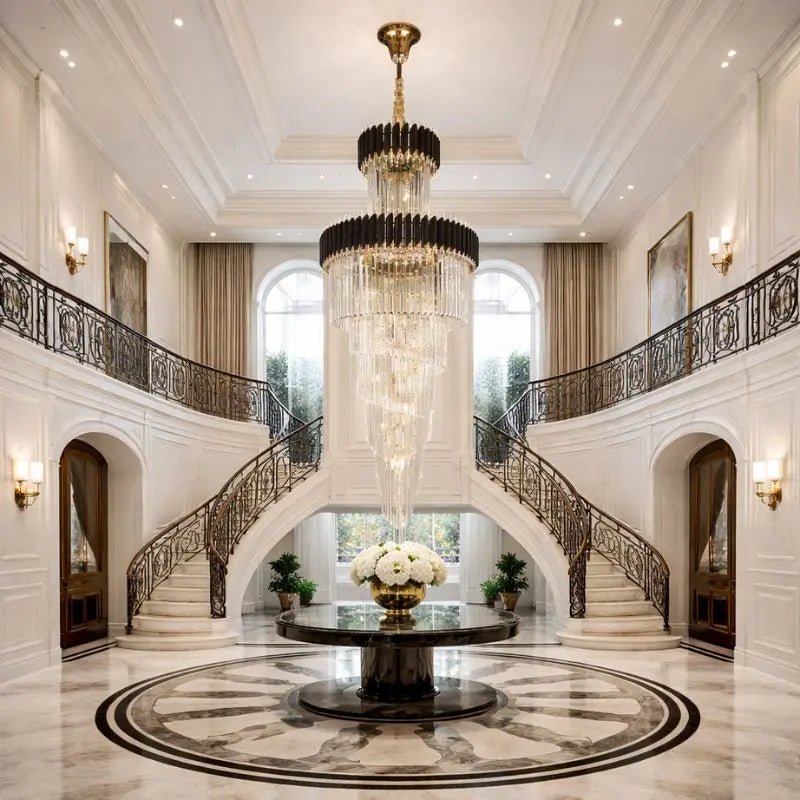
In an entrance hall or stairwell, a vertical alabaster chandelier brings softness to a space that can otherwise feel hard and echoing. A tall ceiling gives a layered or cascading design room to be appreciated from several viewpoints. For a standard-height hallway, a semi-flush or compact ceiling fixture can bring the same material richness without crowding the circulation space.
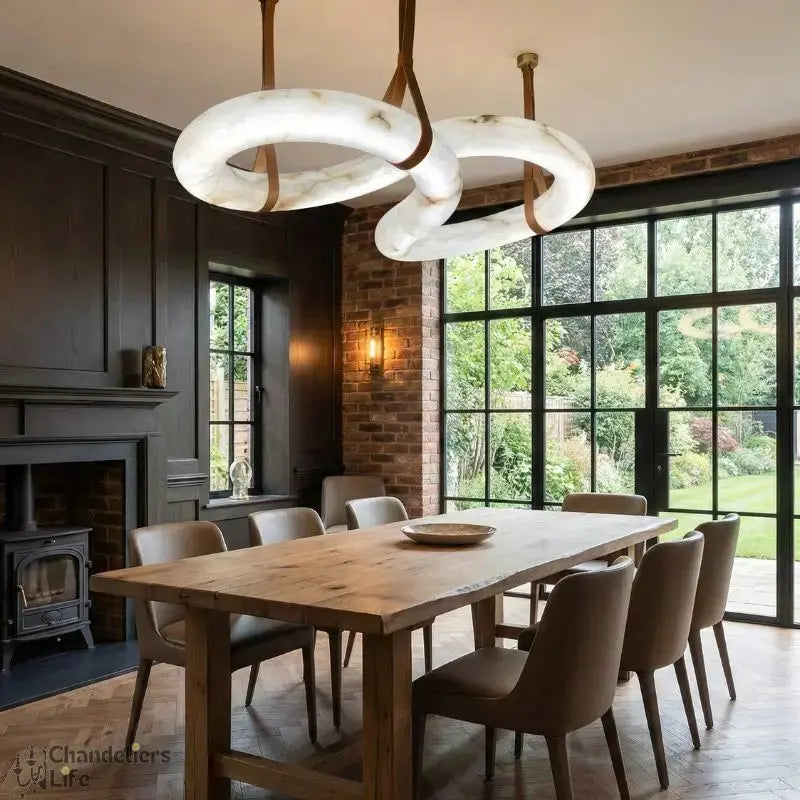
Over a dining table, an elongated alabaster pendant or a linear fixture offers an elegant alternative to crystal. It casts inviting light across glassware and table linen while keeping the composition serene. Aim to centre the fitting over the table, not necessarily the room, and ensure it leaves sufficient visual and physical clearance above seated guests.
Bedrooms suit alabaster particularly well because the material naturally supports a restful atmosphere. A small pendant beside the bed, a low-profile ceiling fitting or a pair of wall lights can add a boutique-hotel finish without relying on overly bright illumination. In living rooms, choose it as the decorative centrepiece, then build practical light levels around it with lamps and accent lighting.
Bathrooms require a more cautious approach. The look can be exquisite, but any fitting must have the correct rating and installation specification for its exact zone. Never select solely for appearance where moisture and electrical safety are involved.
What to inspect before choosing an alabaster fitting
The most rewarding alabaster pieces are thoughtfully engineered as well as visually striking. Start with dimensions and drop length. A grand fixture photographed in a lofty room may feel overpowering in a lower ceilinged property, while an undersized pendant can disappear in an open-plan space.
Then consider the fixture’s construction. Metal frames should look proportionate to the stone components, with neat joins and a finish that complements the overall design. If the fitting has multiple alabaster panels or discs, some natural distinction between them is expected. What matters is that their positioning feels intentional and balanced.
Ask how the lamps are concealed and how accessible they will be when replacement is needed. Integrated LED designs can create a wonderfully clean silhouette, but it is sensible to understand the expected light output and whether the LED component can be serviced. Fixtures using replaceable bulbs can offer more flexibility over brightness and colour temperature.
Weight is another practical consideration. Alabaster is stone, not lightweight resin, so larger chandeliers may require a secure ceiling fixing point and professional installation. This should be treated as part of the investment, especially for stairwell lighting and substantial foyer pieces. A qualified electrician can also confirm dimmer compatibility and ensure the fixture is safely supported.
Care, durability and realistic expectations
Alabaster rewards gentle care. Dust it regularly with a soft, dry microfibre cloth, taking care around edges and metal detailing. Avoid abrasive pads, harsh household sprays and excessive water. The stone is softer and more porous than marble, so it should not be treated like a wipe-clean glass shade.
Its delicate nature does not mean it is impractical. Once fitted in a stable location, an alabaster fixture is generally a low-maintenance feature. The main risk comes during handling and installation, when a dropped or knocked stone component can chip. For that reason, careful professional fitting is a sensible choice for complex or heavy designs.
Natural variation should also be accepted before purchase. A warmer patch, fine vein or tonal shift may become more visible once illuminated. Those details are exactly what lend alabaster its collected, authentic character. If a flawless white surface is the priority, the material may not be the right match. If the priority is a lighting piece with softness, substance and a one-of-a-kind finish, it is difficult to surpass.
Is an alabaster fixture worth the investment?
For a room where lighting is expected to set the tone, rather than merely fill a functional gap, the answer is often yes. Alabaster offers something many modern materials cannot: a sense of permanence paired with a gentle, luxurious quality of light. It feels equally at ease in a contemporary interior with sculptural furniture and in a classic home layered with traditional finishes.
The value depends on choosing the right size, sufficient light output and a design that suits the room’s character. Treat it as the finish that completes the scheme, not an afterthought selected at the end of a renovation. Choose a fixture whose glow you will want to live with every evening, and its natural stone presence will continue to feel considered long after the room is finished.