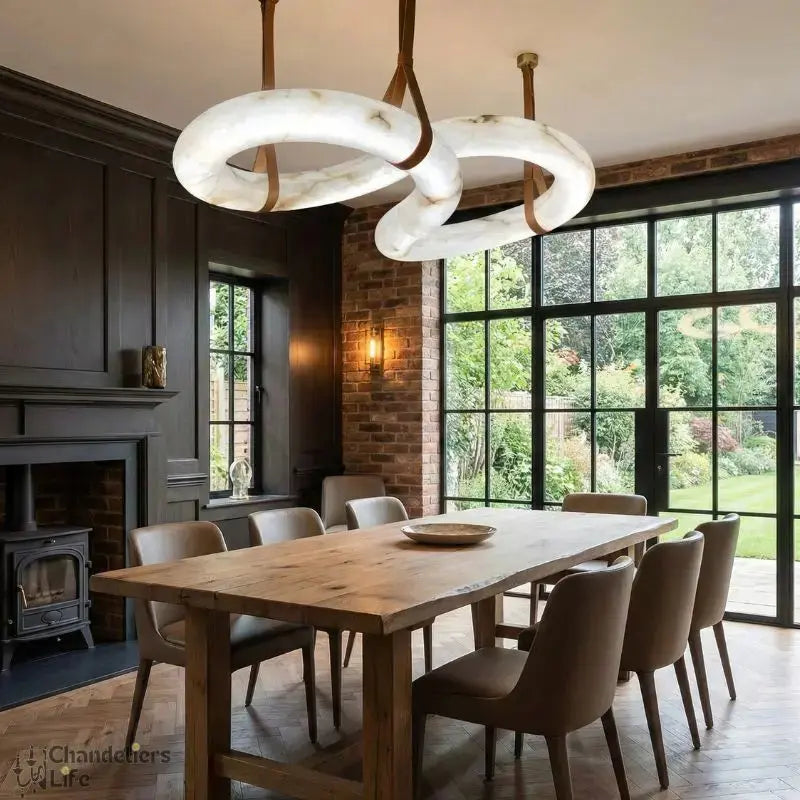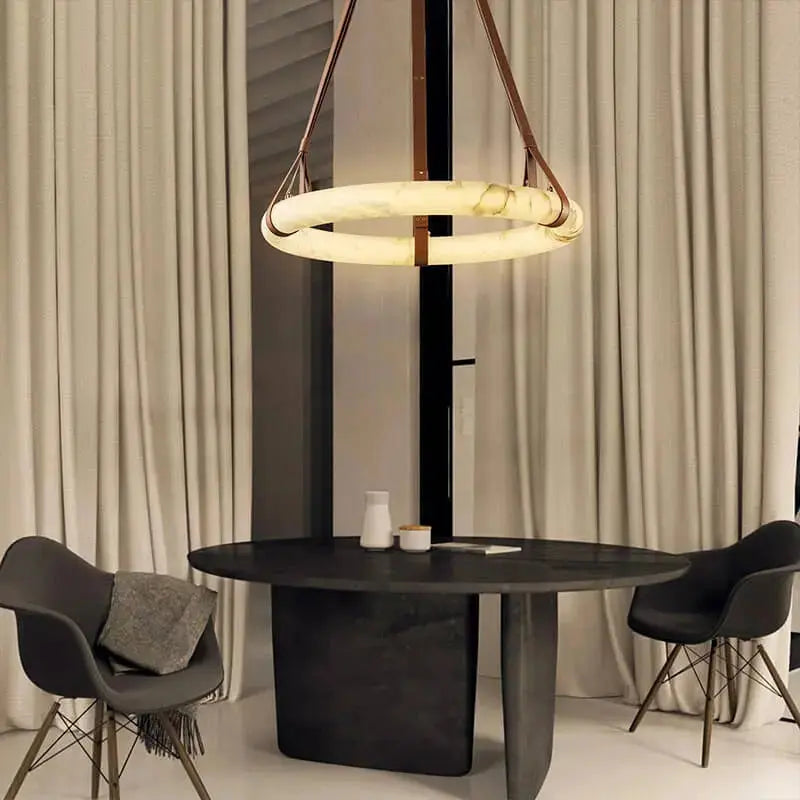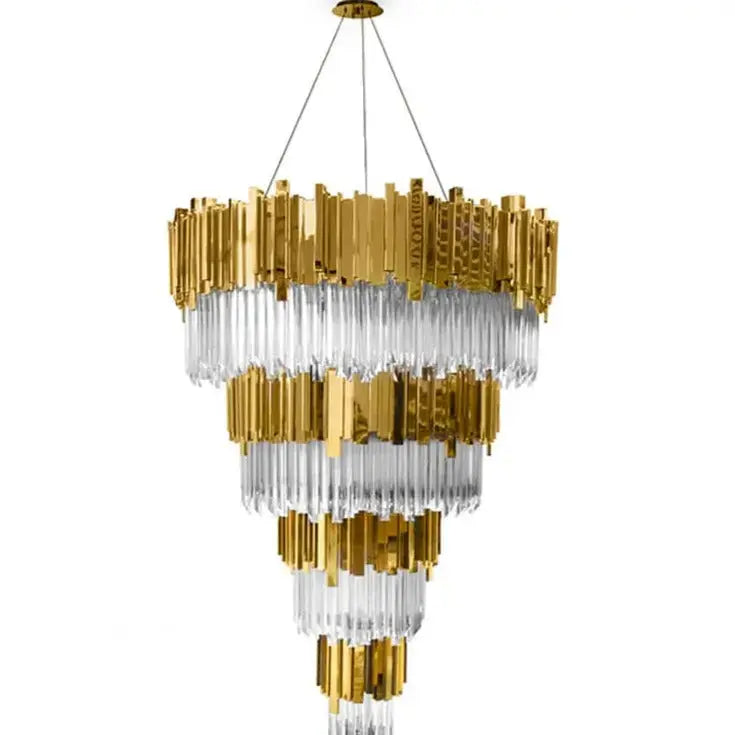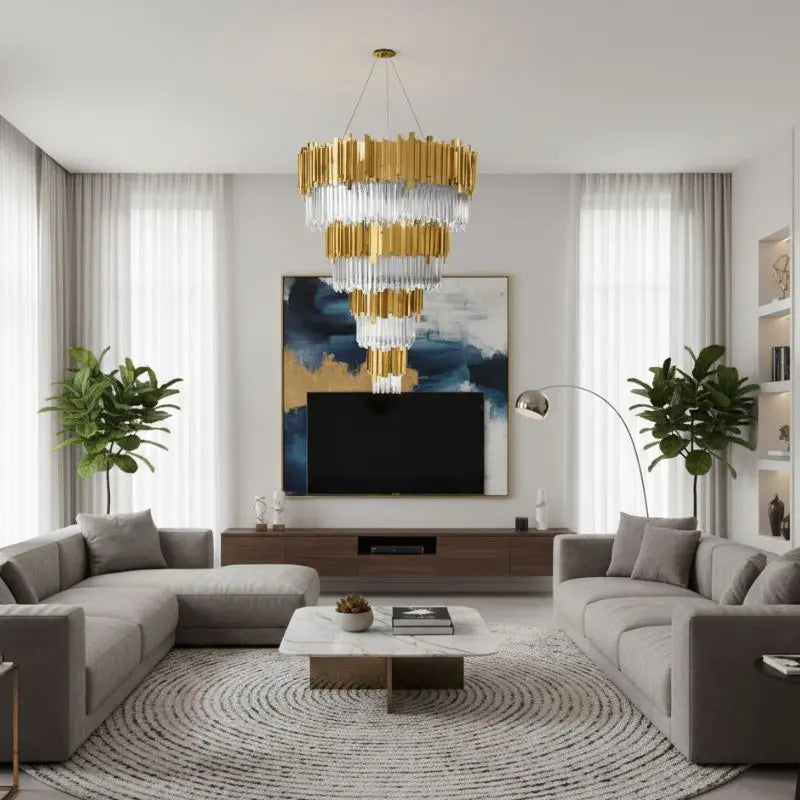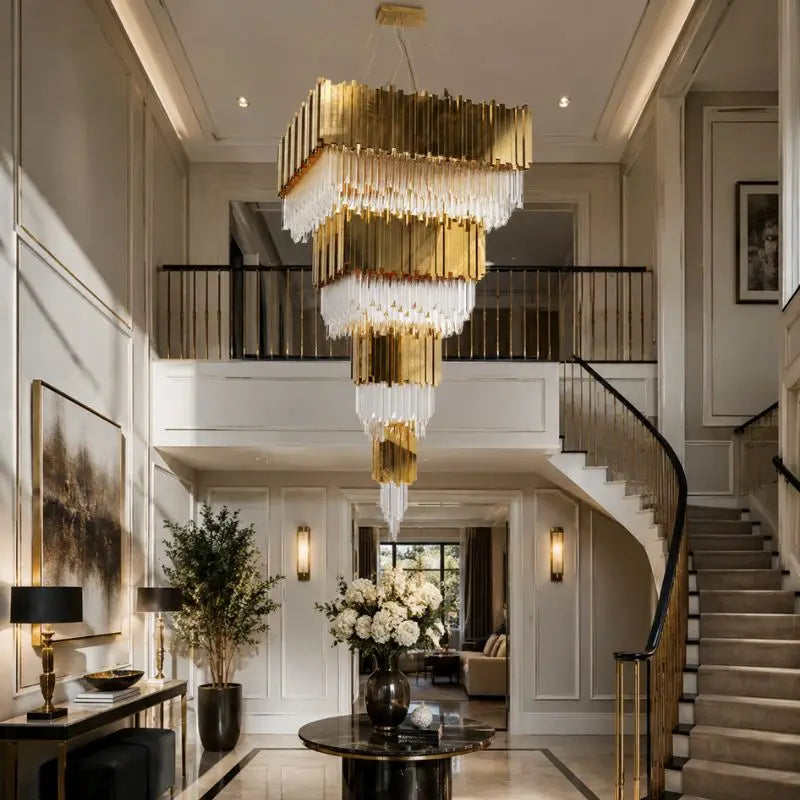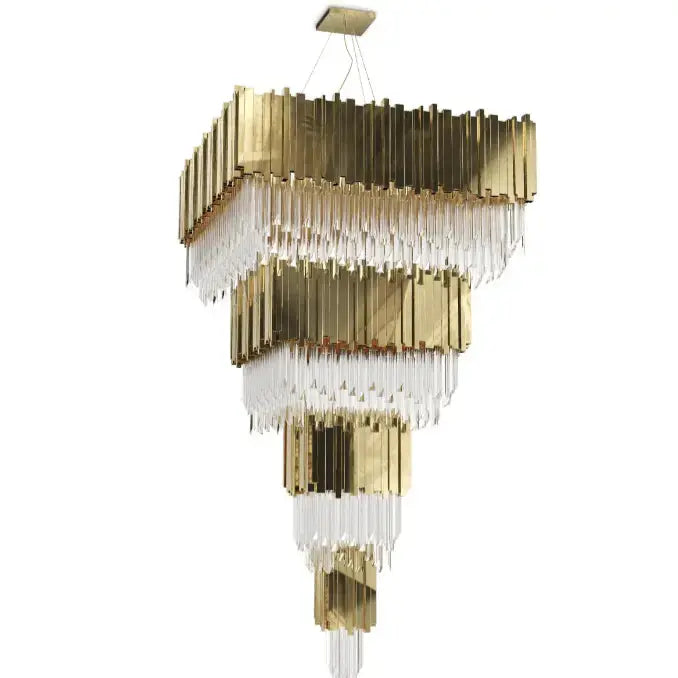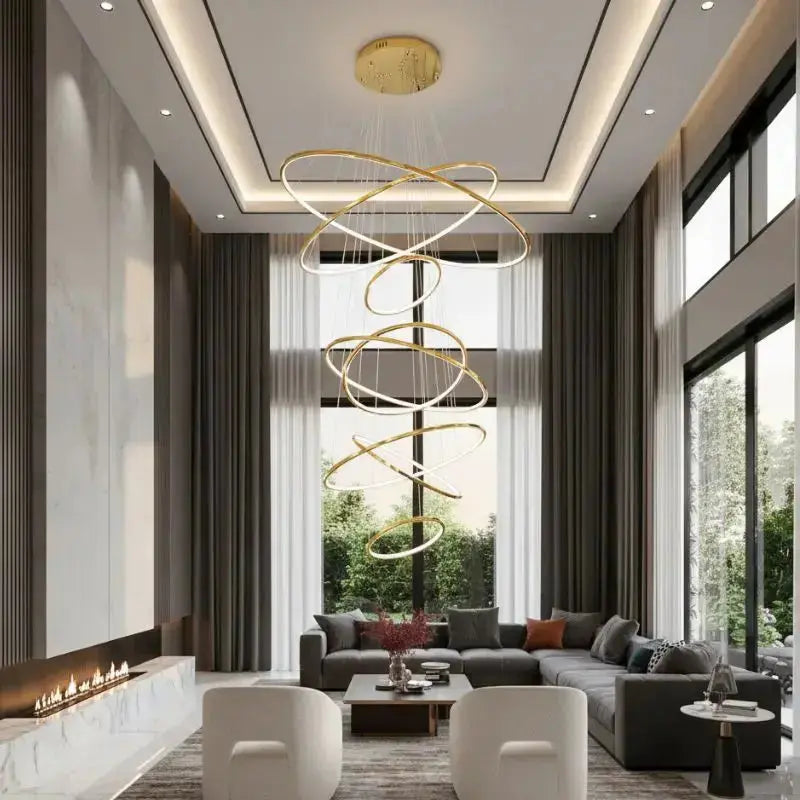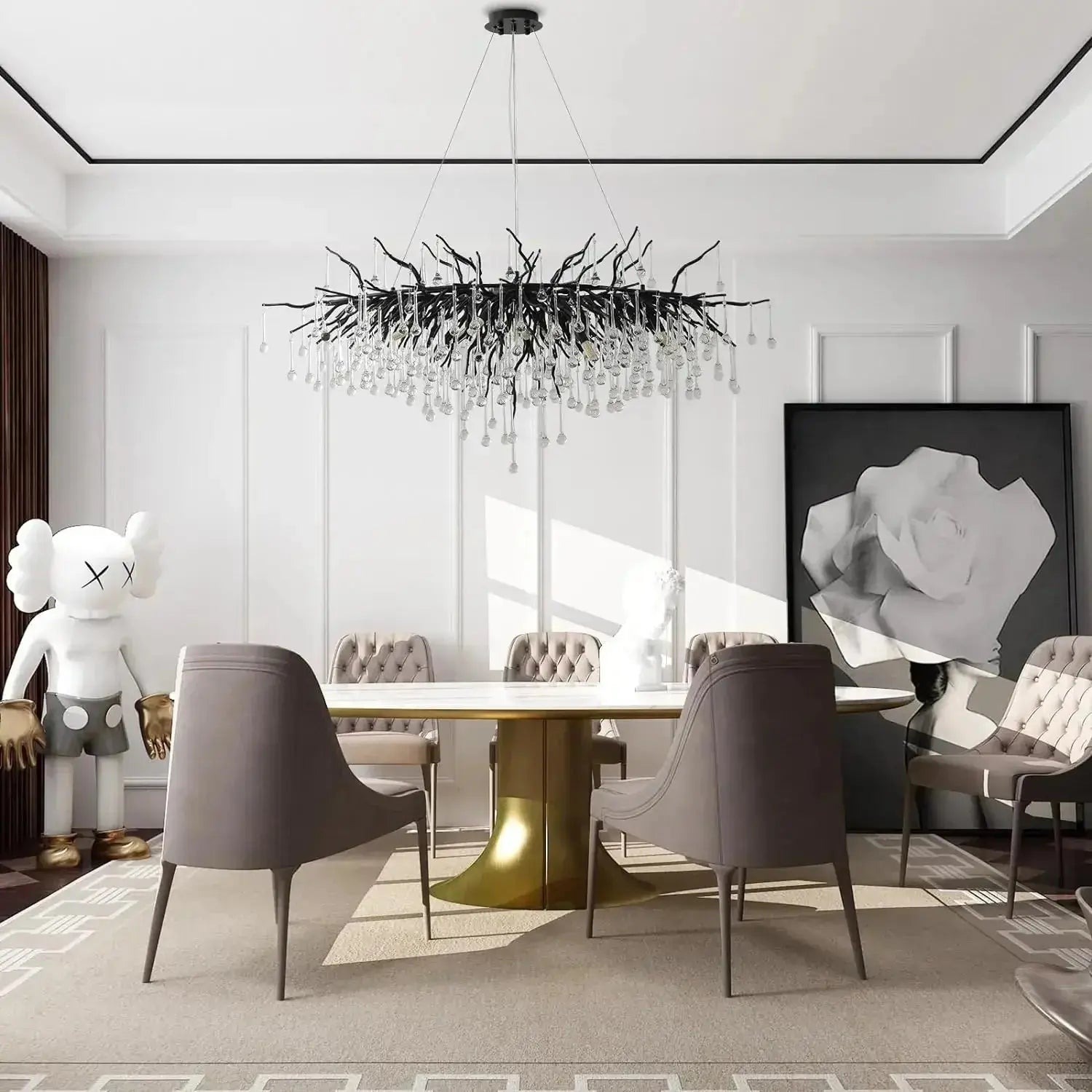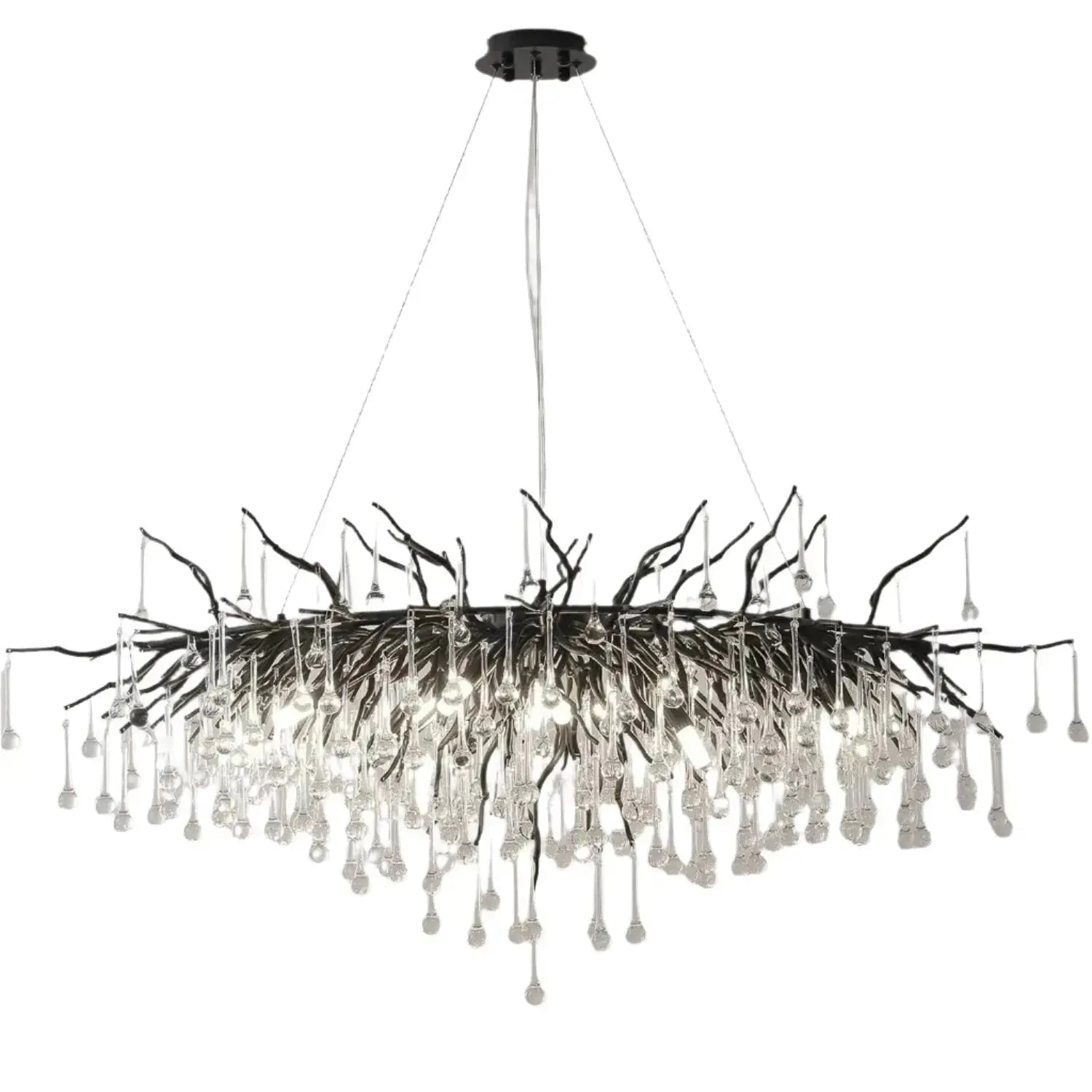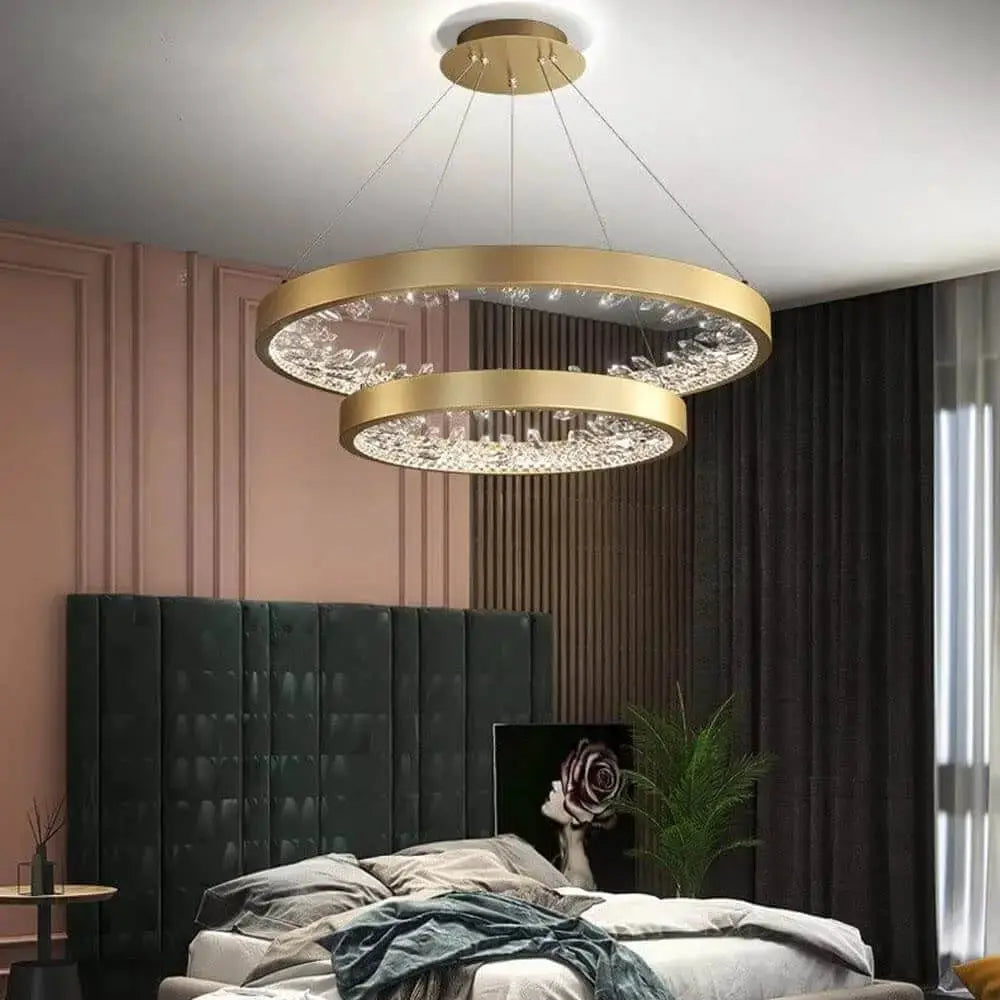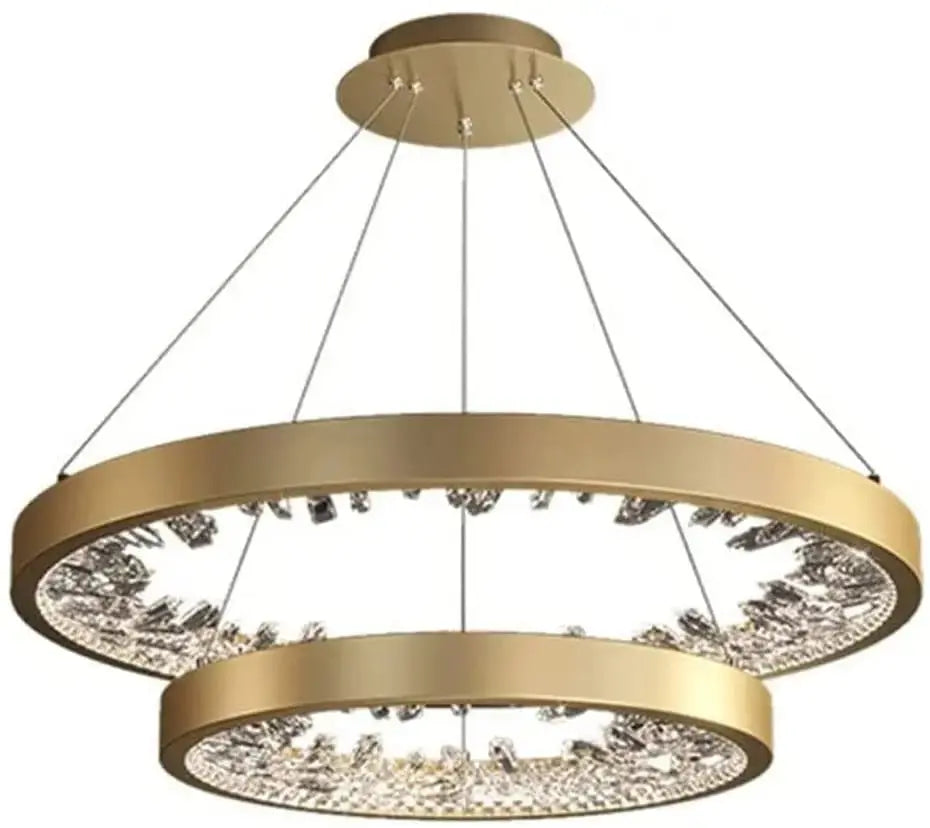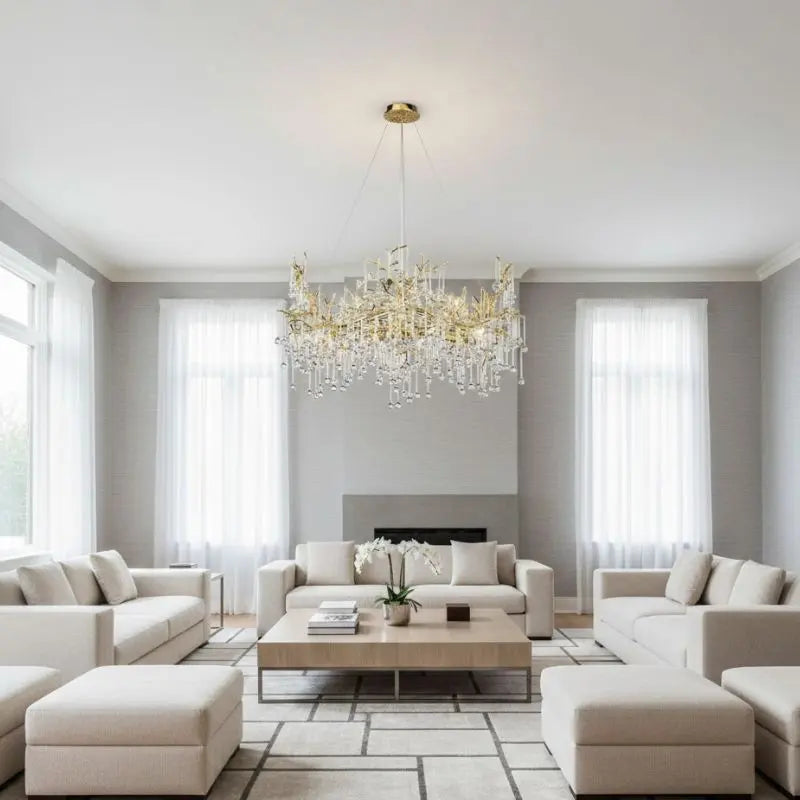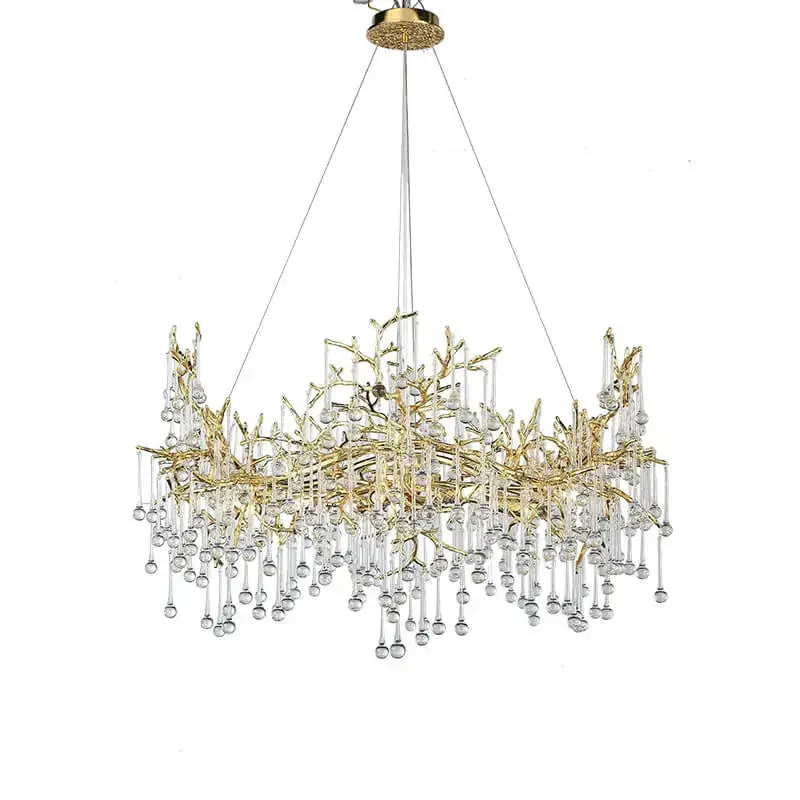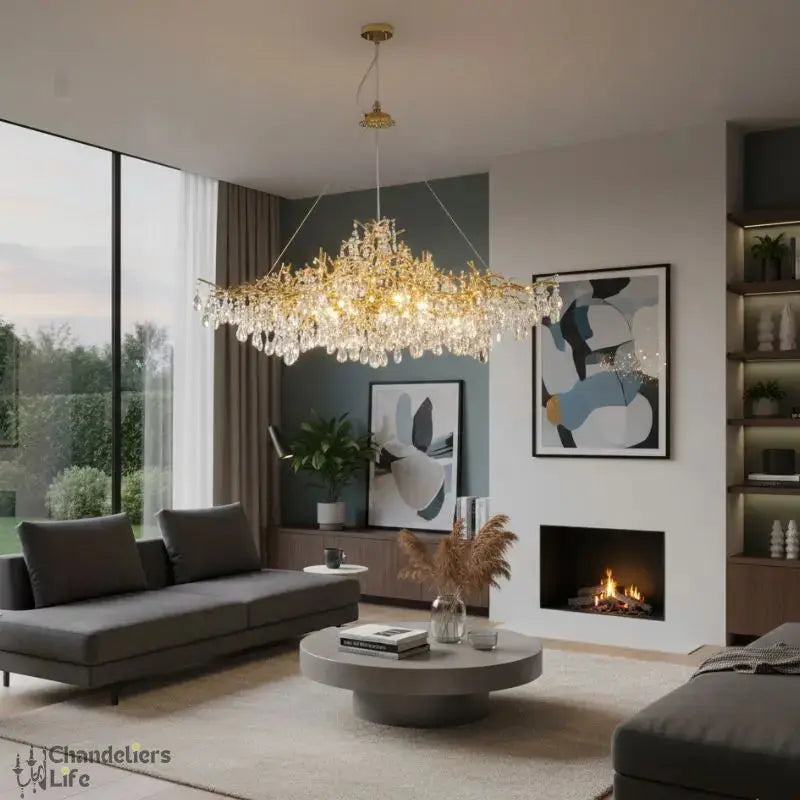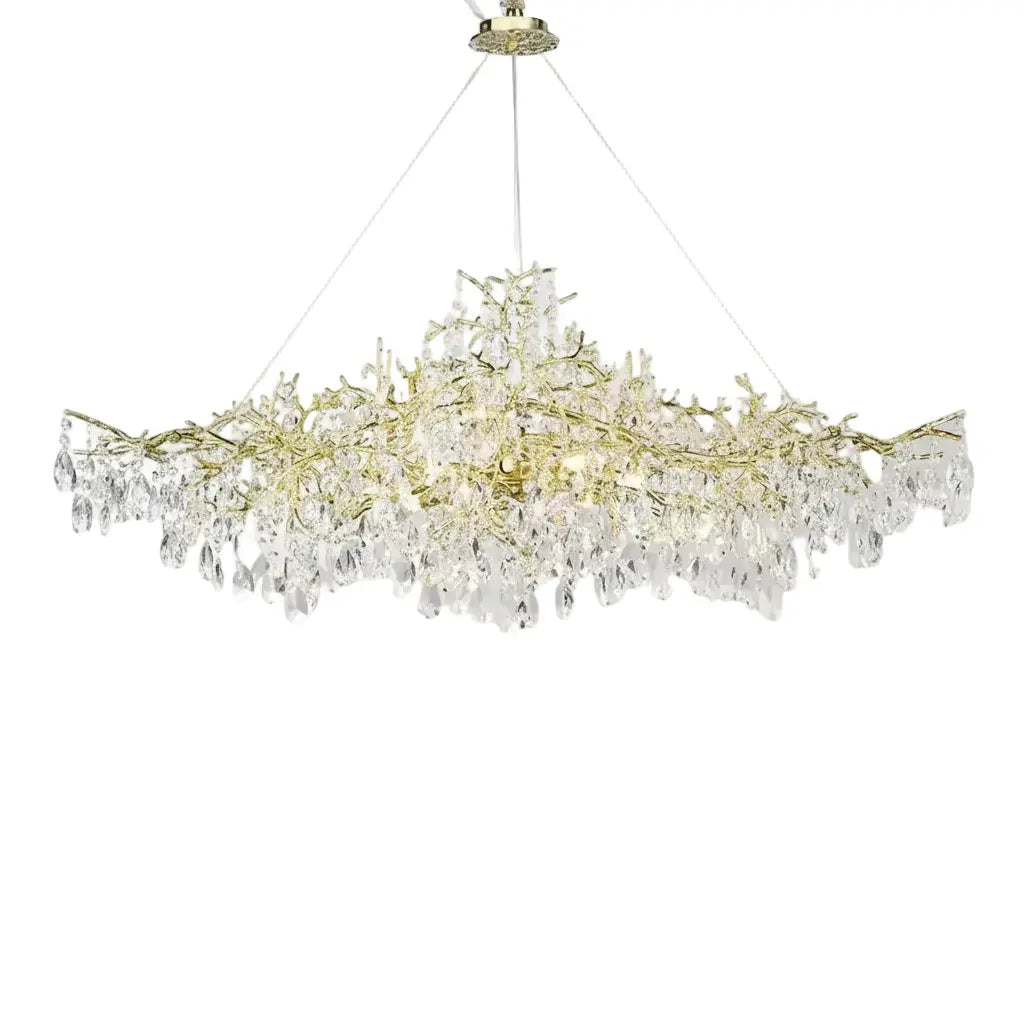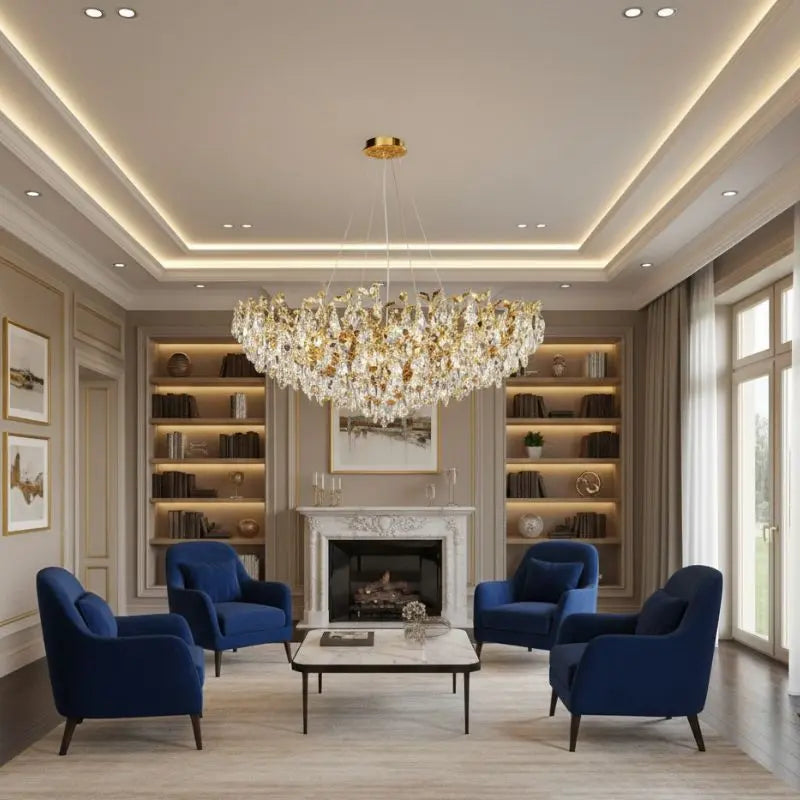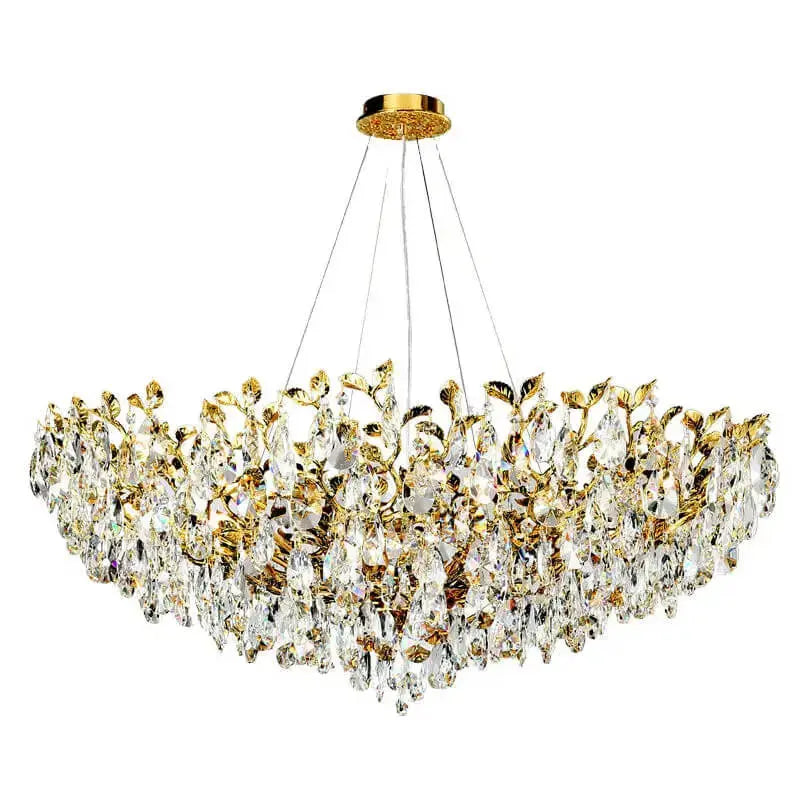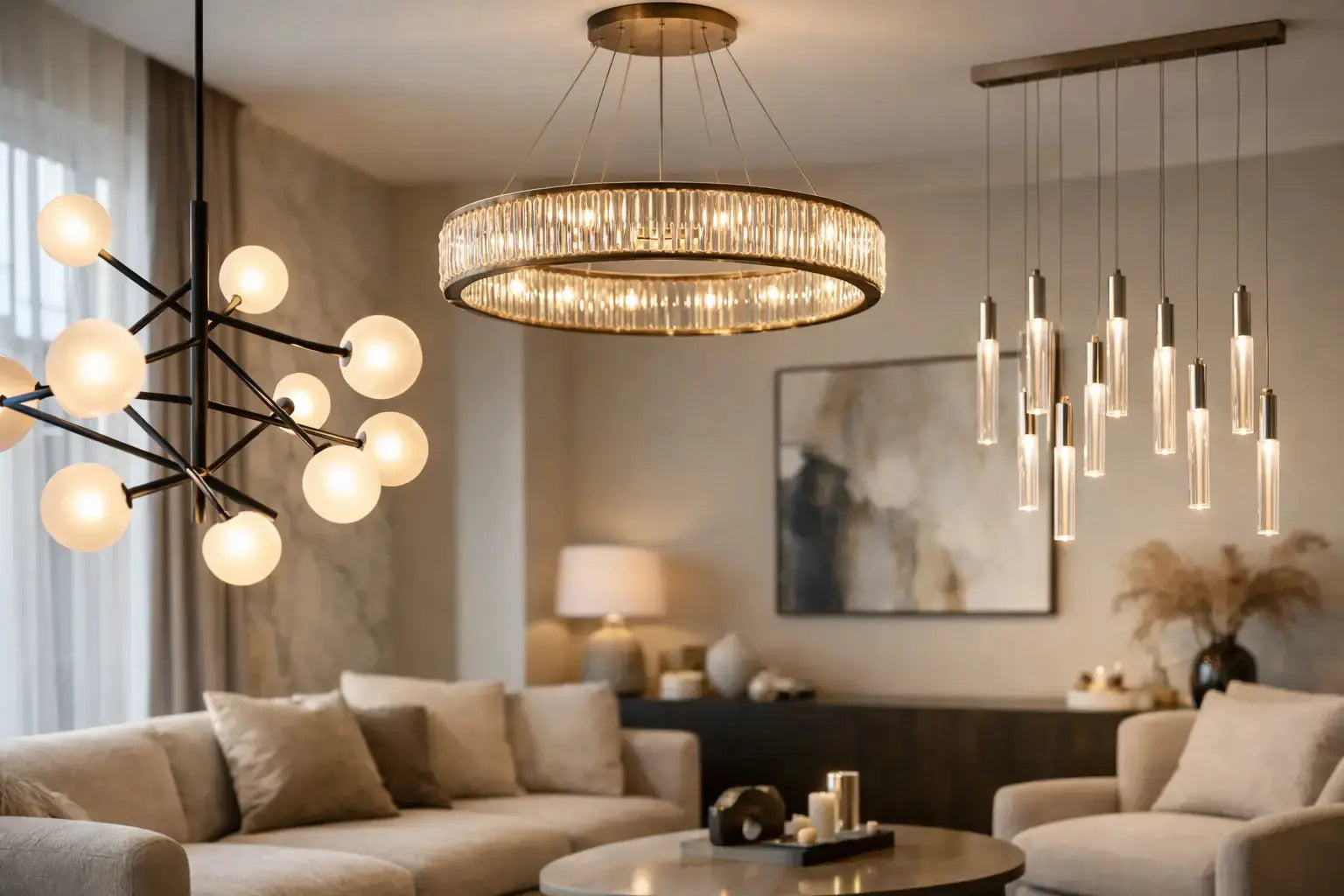
A chandelier should do more than fill the empty space beneath a ceiling. The best contemporary chandeliers establish the mood of a room before a single piece of furniture is noticed: a soft halo above a dining table, a dramatic cascade in a double-height foyer, or a sculptural centrepiece that gives a calm sitting room its sense of finish.
Contemporary design is especially compelling because it balances statement-making presence with restraint. Rather than relying on ornate arms and dense decoration, it uses clean geometry, considered materials and distinctive proportions. The result can feel luxurious without becoming overly formal - provided the scale, light output and placement are right for the room.
What defines contemporary chandeliers?
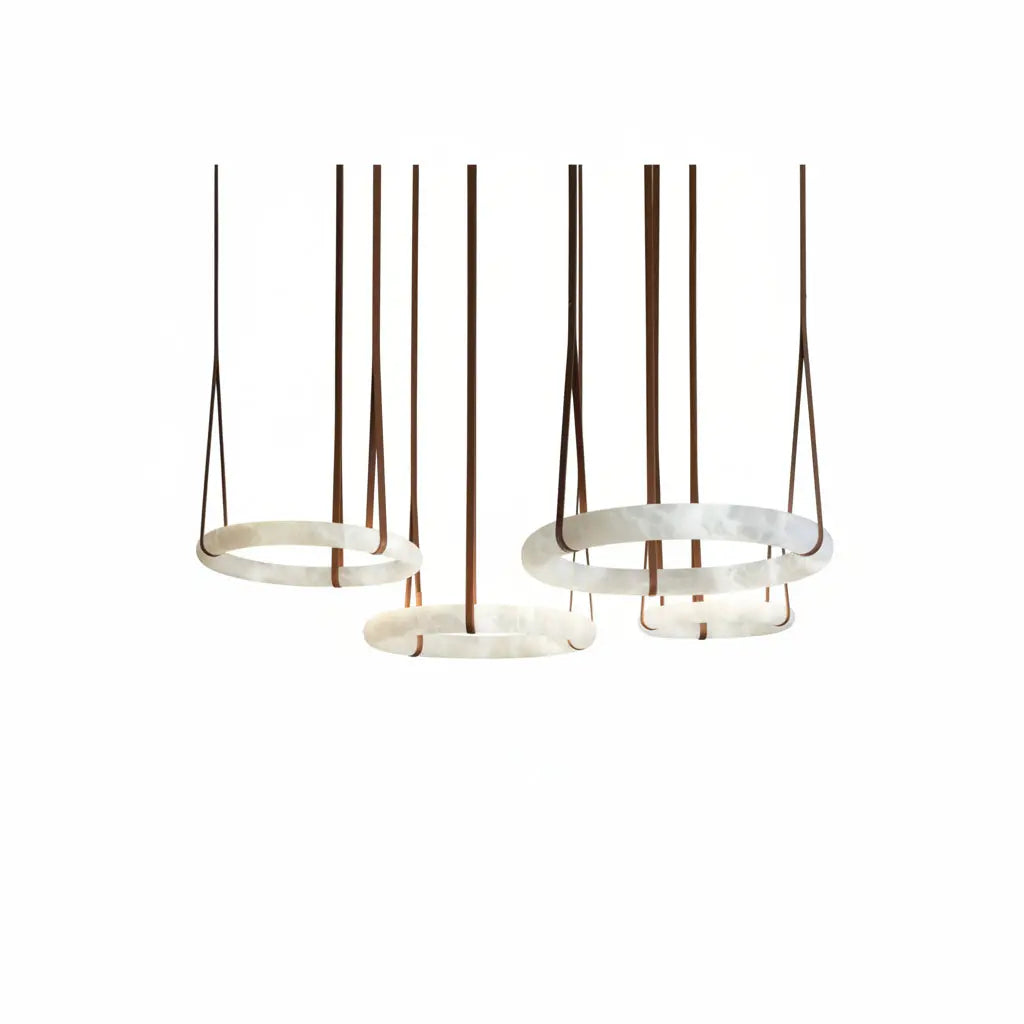
Contemporary chandeliers reflect the design language of the present, but they are not restricted to one look. A linear frame in warm brass, a cluster of smoked-glass globes, an alabaster ring, or an arrangement of suspended crystal rods can all belong in a contemporary interior. What connects them is a deliberate use of silhouette, negative space and material contrast.
This is where contemporary lighting differs from both traditional and strictly minimalist styles. Traditional chandeliers often lean into decorative detailing, curved arms and historical references. Minimalist fittings may reduce the form to its most functional expression. Contemporary chandeliers sit comfortably between those approaches. They can be sleek, but still richly textured; simple, but never anonymous.
Finishes play a major part in their character. Brushed brass lends warmth to cream plaster, walnut and natural stone. Black or bronze metal sharpens a pale, architectural space. Polished chrome and crystal introduce a cooler, more glamorous note, while alabaster offers a gentle luminosity that feels quietly expensive even when the light is off.
Choose the scale before choosing the style
A beautiful fixture can look disappointing when it is undersized, and an oversized piece can make a well-proportioned room feel crowded. Start with the room itself, not simply the chandelier image.
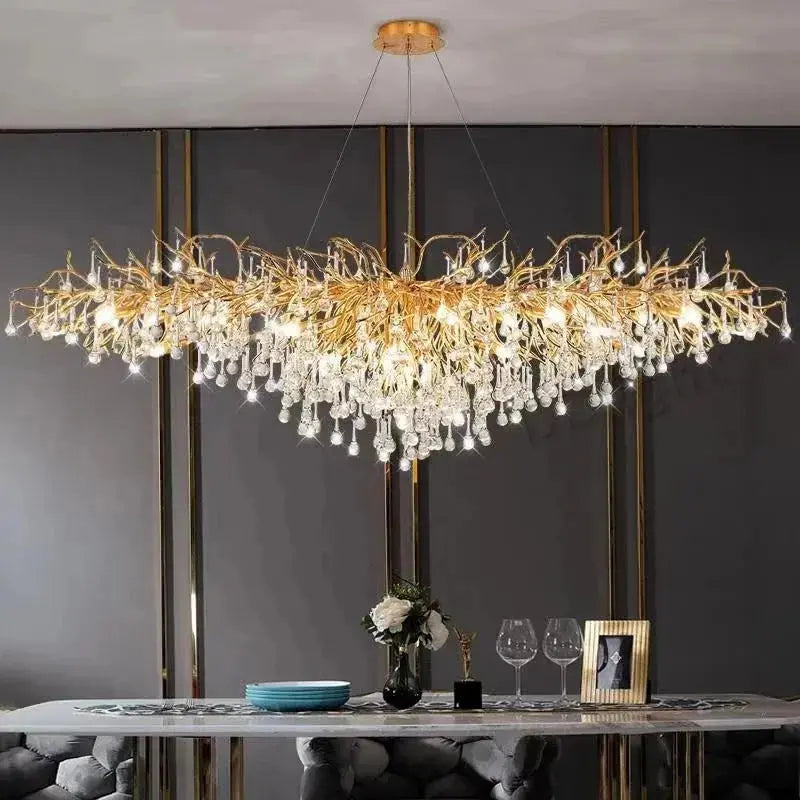
For a dining room, the fixture should feel generous enough to anchor the table without extending beyond its edges. A useful rule is to choose a chandelier that is around half to two-thirds of the table width. Over a round table, a circular or clustered design reinforces the shape beautifully. Over a long rectangular table, linear chandeliers and elongated multi-light compositions provide a more balanced spread of illumination.
Height deserves equal attention. Above a dining table, the lowest point of the chandelier commonly sits around 75 to 90 cm above the tabletop, depending on ceiling height and the visual weight of the fitting. This leaves sightlines open while preserving the intimacy that makes a dining room inviting after dark.
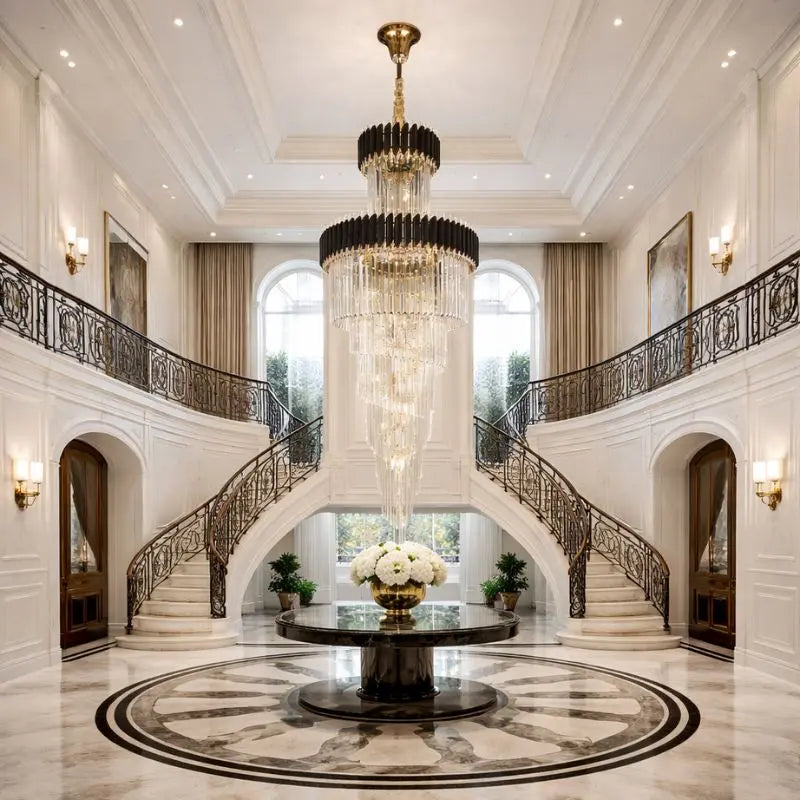
In a foyer or staircase, vertical scale becomes the real opportunity. A cascading chandelier can follow the line of the stairs, draw attention upward and make the entrance feel considered from every level. Leave enough clearance for people to walk comfortably beneath it, particularly near doors, landings and circulation routes. In rooms with standard ceilings, a semi-flush contemporary ceiling fixture may create the same polished effect without compromising headroom.
Contemporary chandeliers by room
Dining rooms: focused and flattering
Dining rooms benefit from light that feels warm, directed and occasion-ready. A contemporary chandelier with opal glass shades or diffused alabaster softens the atmosphere and flatters both food and faces. Crystal can work beautifully here too, especially in modern, linear arrangements where the sparkle is controlled rather than ornate.
Consider the table finish when selecting materials. A dark timber table gains lift from brass, clear glass or pale stone. A marble table can support a more dramatic black, bronze or smoked-glass fixture. If the room already has strong artwork, patterned wallpaper or expressive chairs, choose a chandelier with a clearer silhouette so the interior still has room to breathe.
Foyers and staircases: make the first impression count
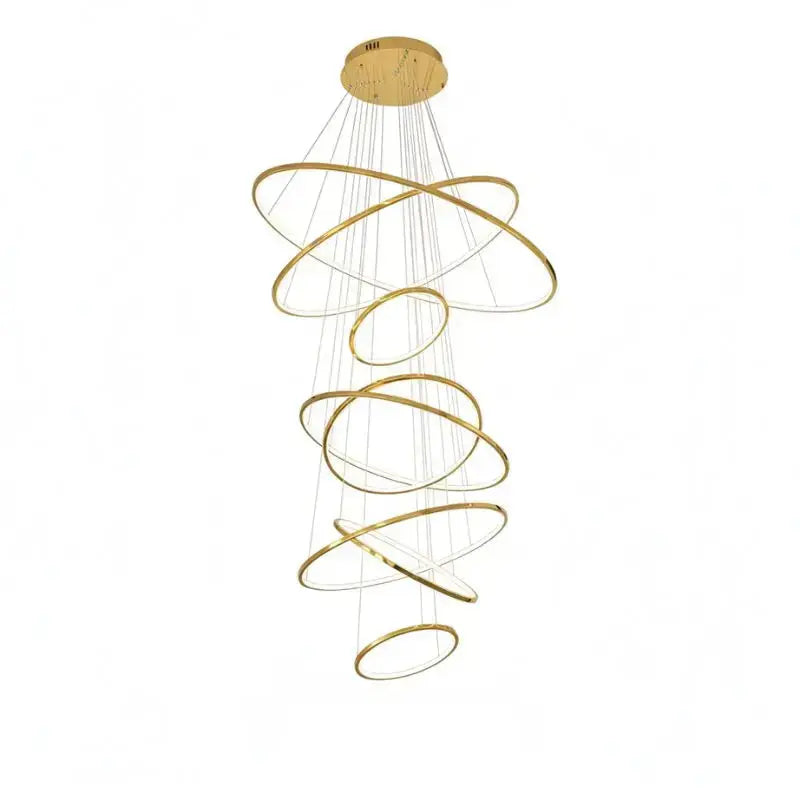
A foyer chandelier is seen in passing, from below and often from an upper floor. It should therefore have visual interest from more than one angle. Rings, globe clusters and tiered crystal designs work exceptionally well because their composition remains compelling as you move around them.
A high ceiling does not automatically require the largest possible fitting. A slender cascade may be more effective than a wide chandelier in a narrow entrance, while a broad, low composition can suit a square foyer with a generous ceiling. The aim is proportion and presence, not sheer size.
Living rooms: sculptural rather than formal
In a living room, chandeliers are often less about task lighting and more about atmosphere. Choose a piece with dimmable bulbs or integrated dimming compatibility, then layer it with floor lamps, table lamps and wall lights. This allows the chandelier to create a refined ambient glow while other sources serve reading corners and quieter evening routines.
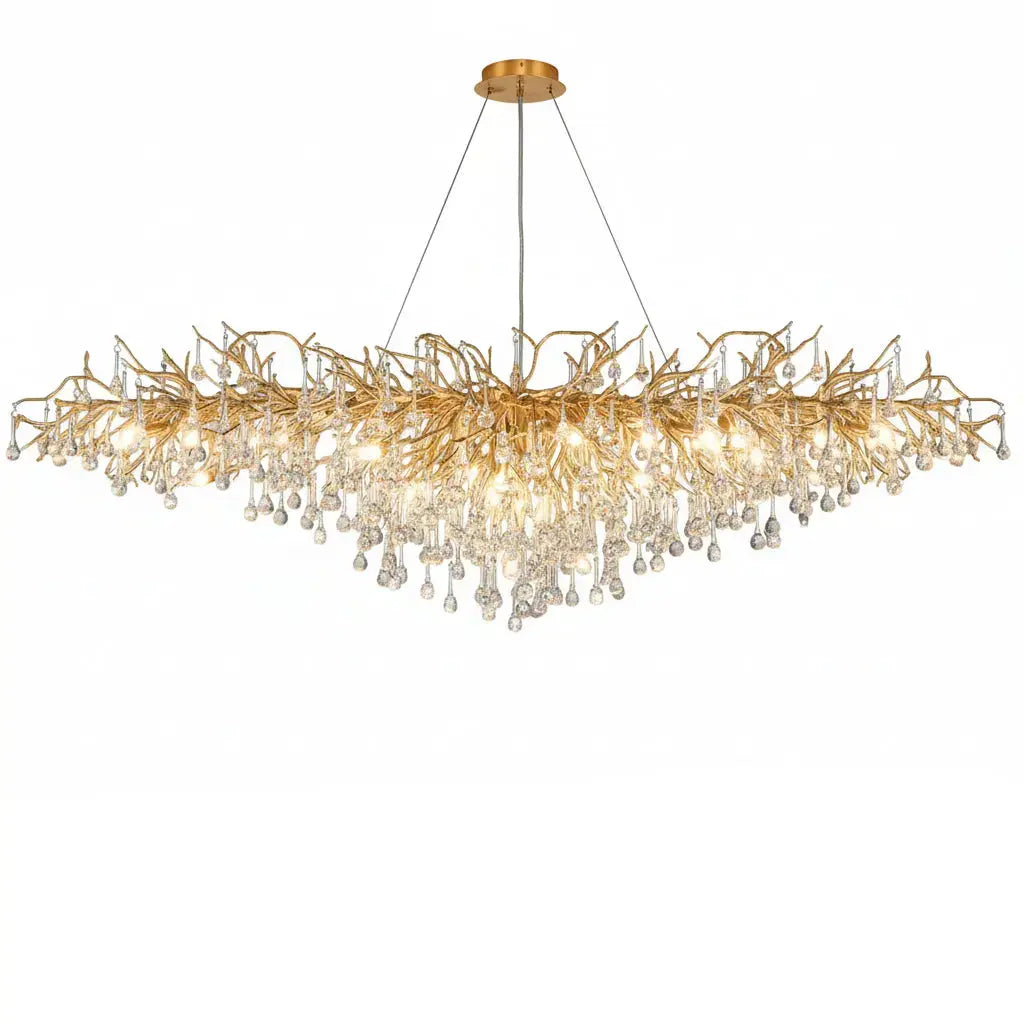
Low-profile rings, branching forms and organic glass designs are natural choices for contemporary living rooms. They bring a focal point to the centre of the seating arrangement without making the room feel like a formal reception space. If your ceiling is low, keep the profile close to the ceiling and let the finish or material provide the drama.
Bedrooms: quiet luxury overhead
A bedroom chandelier should feel more intimate than a foyer piece. Soft glass, fabric-like diffusers, small-scale crystal and alabaster create a restful glow, particularly when paired with bedside lamps. Avoid exposed bulbs that cast harsh shadows or fittings with too much downward glare directly above the bed.
For a tailored look, centre the chandelier over the bed rather than the room if the layout allows. This makes the sleeping area feel intentionally composed, even in a larger bedroom or an open-plan suite.
Light quality matters as much as appearance
The most exquisite chandelier cannot compensate for unpleasant light. Warm white bulbs are usually the right choice for residential interiors, creating a softer, more inviting tone across timber, textiles and skin. For most living spaces, look for a warm colour temperature around 2700K to 3000K. Cooler light can suit utility-led areas, but it may make a dining room or lounge feel less welcoming.
Dimming is one of the most worthwhile details to plan early. A chandelier that looks magnificent during a gathering should also be able to settle into a lower, calmer glow for an ordinary weekday evening. Check the fitting’s bulb requirements, dimmer compatibility and maximum wattage before ordering. Integrated LED designs can offer elegant, fine-lined forms, while replaceable bulbs offer more flexibility over time. Neither is automatically better; the choice depends on whether you value a particular silhouette or the ease of changing lamps yourself.
Materials that give a contemporary chandelier depth
Crystal remains a luxury favourite, but contemporary crystal chandeliers have moved far beyond the classic banquet-hall look. Think vertical prisms, irregular droplets and pared-back tiers that refract light in a crisp, architectural way. They are particularly effective in foyers and dining rooms where movement and evening light can bring the material to life.
Alabaster offers a different kind of drama. Its natural veining means every shade has subtle variation, while its translucency creates a creamy, ambient radiance. It suits interiors with plaster walls, stone surfaces and muted palettes, although it can be heavier and more considered to install than a lightweight glass fitting.
Glass is wonderfully versatile. Clear glass feels airy, smoked glass introduces depth, and milk glass gives a softly nostalgic edge. Metal frames supply contrast and structure, whether you prefer warm brass, understated nickel or a decisive matte black. The most successful choices echo elements already present in the room rather than matching every finish exactly.
Avoid the common styling mistakes
One matching metal throughout a home can look orderly, but it can also feel flat. A brass chandelier may sit beautifully alongside black door hardware or nickel taps when each finish appears intentional. Repeating a finish once or twice is often enough to create a connection.
Another mistake is treating a chandelier as the only source of light. Even a large fixture creates shadows, especially in rooms with dark walls, deep alcoves or layered furnishings. Pair it with lamps and wall lighting for a more dimensional interior. Finally, do not select solely from daytime photographs. Consider how the fitting will look when illuminated, how it will cast light on the ceiling, and whether its view from below is as attractive as its front-facing image.
A contemporary chandelier earns its place when it feels like part of the architecture of your home, not an afterthought suspended from it. Choose the piece that makes you pause at the threshold, then give it the scale, warm light and surrounding layers it deserves. That is how a practical ceiling fitting becomes the detail guests remember.